
Fossil Shark Skeleton: What Ancient Sharks Reveal About the Ocean’s Past
The discovery of a fossil shark skeleton is one of the most intriguing and rare finds in marine science, providing insight into a period in our oceans’ past when sharks roamed millions of years ago. Sharks have been on Earth for more than 400 million years; however, completely preserved skeletal remains are very rare, and each find is an important piece in piecing together the evolution of these ocean predators.
What Is A Fossil Shark Skeleton?
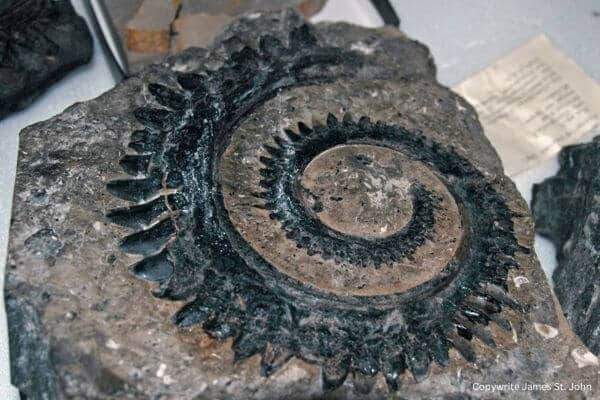
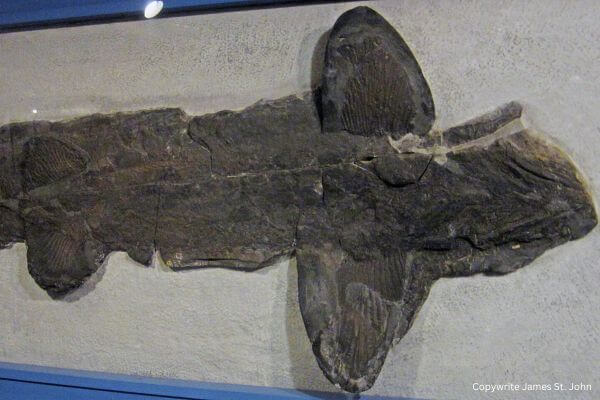
A shark skeleton fossil is when a shark’s skeletal structure has been fossilised for millions of years. While most shark fossils are typically found as individual teeth, an actual shark skeleton can include parts such as vertebrae (the spinal cord), cartilage impressions, fin structures (occasionally), and body outline imprints from the sediment where it was buried.
Since sharks are primarily composed of cartilage rather than bone, their skeletons rarely fossilise. Therefore, finding a complete or partially intact skeleton provides valuable information to palaeontologists.
Why Are Shark Skeletons Rarely Preserved?
Sharks differ significantly from other fish in terms of their skeletal systems, as they are constructed entirely of cartilage.
Cartilage is:
- Softer and less rigid than bone
- Decomposers can quickly destroy it
- More difficult to preserve or become fossilised
When a shark dies, its body will decompose rapidly. Scavengers may feed on the carcass’s remains, leaving very little behind. Only the harder materials, such as teeth, have a good chance of survival.
Sharks have one key difference compared to other fish: They do not have a bony skeleton.
The primary difference between cartilage and bone is as follows:
- Bone is harder.
- Cartilage is softer and less rigid.
- Bone survives for many years after an animal dies, but Cartilage deteriorates quickly.
Because of this, when a shark dies:
- Its remains will quickly disintegrate
- It’s unlikely for a scavenger to be unable to eat all of its flesh
- All that usually remains for scientists are very durable body parts, like teeth.
Therefore, it is generally the case that fossils of sharks contain just the teeth of the shark, never the entire skeleton.
How Do Shark Fossils Form Over Time?
For a fossil shark skeleton to be formed, very specific conditions must occur:
- The shark must die in a low-oxygen environment to slow decay.
- It must rapidly be buried by sediment
- Minerals will gradually replace organic material over millions of years.
This process is called fossilisation, and it can preserve even delicate structures if the right conditions exist.
What Can A Fossil Shark Skeleton Tell Us About Prehistoric Sharks?
Fossilised shark skeletons provide much more data for scientists compared with tooth evidence, such as:
- Size and body shape of a species
- How they swam
- Patterns of growth
- Classification
Studying fossils that represent ancient shark skeletons helps researchers understand how these ancient predators swam, hunted, and adapted to their environments.
Where Have Fossil Shark Skeletons Been Discovered?
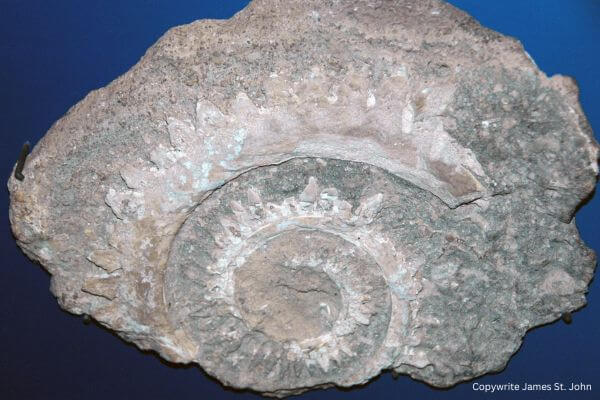
Although rare, fossilised shark skeletons have been discovered on several continents:
-North America
-Europe
-Parts of South America
–Ancient seabeds are now exposed as rock formations
These fossils were all located in areas that are currently land, which at one time were the ancient ocean floor (seabed) that has since become a rock formation.
Many of the largest collections of fossilised shark remains are housed in museums or other scientific research organisations, such as the Smithsonian Institution.
How Old Are the Oldest Fossil Shark Skeletons?
Sharks have been around for approximately 400 million years; however, because most of their bodies do not preserve as easily as other body parts, fossilised skeletal remains from this period are relatively rare.
Examples of well-preserved skeleton fossils can be found dating back to:
- Early ancestors of modern shark species from the early Devonian Period.
- Jurassic Period
- Cretaceous Period
Thus, by studying the fossil record of these three time periods, it is possible to understand how sharks evolved during different extinction events and the evolutionary changes they underwent that allowed them to survive past mass extinctions and evolve into the many species seen today.
What Is The Difference Between Shark Teeth Fossils and Full Skeletons?
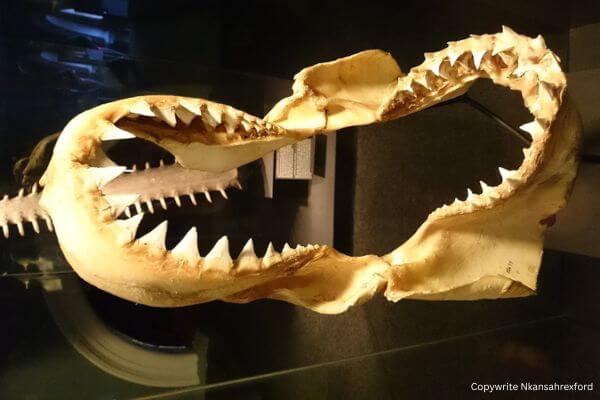
Most shark fossil information is based on teeth because they are the most abundant, durable and long-lived (to say nothing of inexpensive) fossil type.
Fossilized Shark Teeth:
- Common enough.
- Enamel is a very hard material.
- Long-lasting as well.
Fossilized Shark Skeletons:
Rare, primarily made up of cartilage. It must be in an ideal condition to create a skeleton.
Teeth give some idea of what a shark ate and which kind it was. However, to get a better idea of a complete shark’s body structure, skeletons are far superior.
Are There Any Complete Fossils?
Fossil complete shark skeletons are extremely rare; however, examples have been found.
Some instances of this include:
- Body outline preservation of an entire body
- Skin impression evidence has also been located.
- Fossil remains of soft tissues can be preserved as well.
These types of finds are quite invaluable to science and are often displayed in museums.
Which Prehistoric Sharks Are Known From Fossils?
A few ancient shark species have been identified by partial or almost complete skeleton evidence, these include:
- Cladoselache– possibly one of the first documented sharks
- Stethacanthus– identified due to its unusual dorsal fin design
- Hybodus– a shark which co-existed with dinosaurs
Knowledge of these sharks’ fossils helps scientists document the evolution of today’s sharks.
How Does a Fossil Shark Skeleton Help Us Understand Evolution?
Because fossilised remains of prehistoric sharks serve as “time capsules”, scientists can compare the anatomical features of ancient and contemporary sharks to track evolutionary trends over millions of years. The study of these fossils can also help scientists understand how ancient shark populations may have adapted to different environmental conditions. For example, early fossil evidence indicates that different fin types distinguished some ancient shark species. In addition, many of these ancient shark bodies exhibit forms or traits not found in modern shark populations. Lastly, these fossil records demonstrate how the physical attributes that enable modern sharks to be such formidable swimmers evolved.
What Makes Sharks Different From Bony Fish in Fossil Records?
Differences lie in their bony skeleton.
Sharks have cartilaginous skeletons and rarely fossilise, whereas the entire fossil record of sharks is based on their teeth. Bony fish have a hard bony skeleton with a much greater rate of fossilisation than cartilage, which allows them to provide more complete records from fossils.
Therefore, finding the fossilised skeletons of sharks can help to fill in some of the gaps in what we know about sharks, as evidenced by their fossilised teeth.
Which Environments Are Best for Preserving Fossil Skeletons?
Several environments are more likely to preserve a body after death.
Examples include:
- Deep Marine Basins, where there is very little oxygen present.
- The environment of fine sediments, such as mud or silt.
- Areas of calm water where there has been very little disturbance in recent history.
These types of environments preserve the body’s remains long enough for them to be fossilised.
Why Fossil Shark Skeletons Matter Today
Studying a fossil shark skeleton isn’t merely an examination of something from the past. It allows scientists to examine the potential for future marine ecosystems to evolve based on lessons learned through studying how sharks:
- Have survived multiple past climate changes.
- How have they adapted as their ocean environment has changed
- Their evolution across millions of years.
The lessons from those studies will enable scientists to understand and predict how modern shark species will adapt to current environmental change.
Ancient Oceans to Modern Adventures
Shark cages have always allowed us to see some of the ocean’s most iconic creatures up close, but now we can take our fascination with sharks even further by witnessing the same species that roamed the seas millions of years ago.
If you’ve ever been fascinated by prehistoric sharks and want to get an idea of what they’re like today, then witness these incredible sea creatures in their own habitat while enjoying shark cage diving in Gansbaai.