
Tiger Shark: Dive into the World of This Striped Ocean Predator
The ocean features the tiger shark as one of its most potent and well-known shark species. The apex predator stands out for its distinctive stripes and wide-ranging diet, which make people both respect and fear it.
What Makes Tiger Sharks Unique?
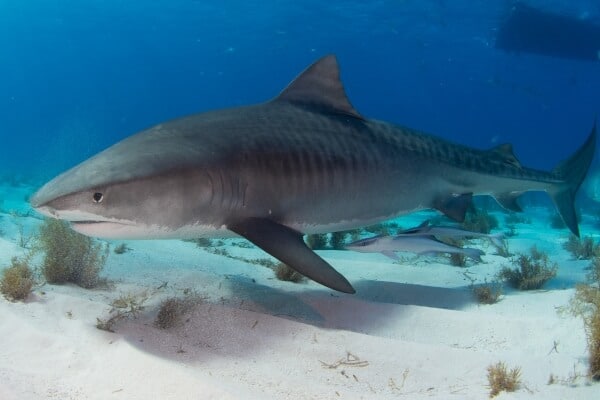
The Galeocerdo cuvier species earns its name from its dark-striped appearance, which fades as it ages, and from its blunt nose. The sharks possess both an inquisitive nature and a diet that includes every food source they encounter.
Scientists, along with divers, track this shark species because it occasionally attacks humans.
Are Tiger Sharks Aggressive?
They stand out as highly aggressive species because they feed actively and display investigative behaviour. Most sharks tend to avoid human contact when they swim through the ocean. The second most frequent unprovoked shark attacks involve tiger sharks, although these incidents remain extremely rare.
These sharks function as opportunistic feeders because they use their powerful jaws to investigate any potential food source, including tyres, licence plates, and cans.
Can These Sharks Live in Freshwater?
These sharks belong exclusively to saltwater environments, while bull sharks can exist in both saltwater and freshwater environments. Warm coastal saltwater provides the perfect habitat for tiger sharks, which die quickly when exposed to freshwater environments.
Swimming in a freshwater lake puts you completely beyond the reach of these sharks.
How Big Do Tiger Sharks Get?
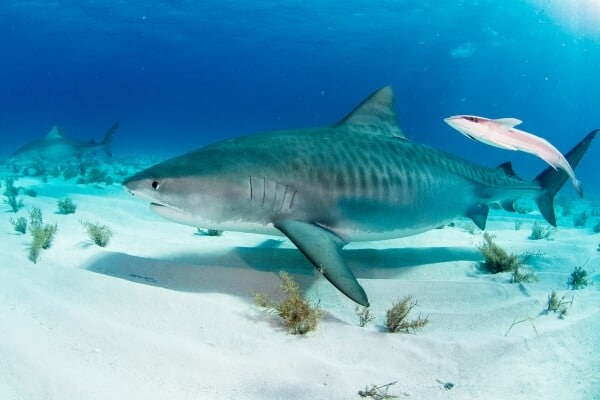
Tiger sharks are massive!
- Average length: 3.2 to 4.2 metres (10.5 to 14 feet)
The most significant recorded length of this species exceeds 5 metres (16.5 feet).
- Weight: Between 385 and 635 kilograms (850 and 1,400 pounds)
Ocean predators belong to the second largest group of shark species in the world.
What Do Tiger Sharks Eat?
Tiger sharks receive their nickname “garbage cans of the sea” because of their eating habits. Their diet includes any food source they encounter.
Typical Tiger Shark Diet:
- Sea turtles
- Seabirds
- Fish (including smaller sharks)
- Crustaceans
- Rays
- Dolphins
- Seals
- Squid
The powerful stomach acids of these sharks enable them to eat various prey types that other sharks cannot consume, including bone and shell material.
Where Do They Live?
These sharks inhabit tropical and subtropical ocean waters throughout the world. These sharks prefer to stay in shallow coastal waters with warm temperatures; thus, they inhabit areas where humans are frequently present.
Common Shark Locations:
- Indian Ocean (including off the coast of South Africa)
- Caribbean Sea
- Pacific Islands (like Hawaii)
- Western Atlantic (including Gulf of Mexico)
- Australia’s northern waters
These predators spend their nights near coastal areas to hunt, but they also spend time in open ocean waters.
Do These Sharks Sleep?
Most sharks don’t sleep like humans do. The tiger shark must swim constantly because it relies on breathing through its movement.
The shark enters a state of restful swimming , which allows a portion of its brain to stay active for alertness. This function operates similarly to the autopilot system found in human vehicles.
What Do Tiger Shark Stripes Look Like?
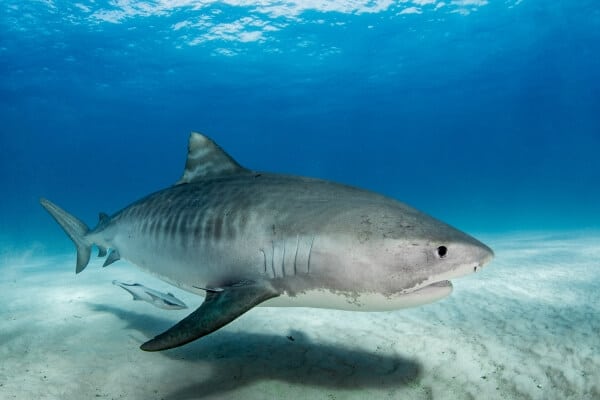
- The most recognisable feature of tiger sharks is their striped pattern. The dark vertical bars across their bodies remain most visible in young tiger sharks.
- During shark maturation, the stripes diminish in intensity, though they never completely vanish.
- The markings serve as a protective strategy which allows the shark to blend with the sunlight that passes through the water, thus enabling it to approach its prey undetected.
Shark Bite Force: How Powerful Is It?
The bite force of a tiger shark is nothing short of jaw-dropping. The exact measurement of their bite force remains elusive, yet experts have calculated it to reach:
- The bite force reaches up to 6000 newtons while humans manage only 100 – 150 newtons on average
- Their bone-crushing strength enables them to consume turtles alongside large fish and occasionally whales.
Are Attacks Common?
These sharks rank as the second-deadliest species responsible for shark attacks against humans, behind only the great whites (which you can cage dive with in Mossel Bay, South Africa), according to recorded statistics. These incidents occur at an extremely low frequency.
Reasons Why Attacks May Occur:
- Mistaken identity (e.g., thinking a surfer is a seal)
- Natural curiosity
- The investigation of potential food resources serves as one possible reason.
The International Shark Attack File shows that these shark bites against humans result in no deaths since the sharks tend to bite once before leaving the scene.
How Do Tiger Sharks Reproduce?
Tiger sharks reproduce through ovoviviparity because their eggs develop inside the mother before she delivers live offspring.
- Gestation period: 13–16 months
- Litter size: 10 to 82 pups
- Pup size at birth: 50–75 cm (20–30 inches)
Tiger sharks do not display external eggs like egg-laying species do. The embryos in the uterus receive nourishment from yolk sacs as they develop.
What Is Their Lifespan?
The wild lifetime of a tiger shark extends from 20 to 30 years. The majority of sharks fail to survive into old age because of fishing activities combined with boat collisions and net entanglement.
The males reach their full size over 3.7 meters and the females at 4.2 meters in length.
How Much Does a Tiger Shark Weigh?
A grown-up shark weighs between 385 kilograms and 635 kilograms (850 pounds to 1,400 pounds) , but scientists have recorded bigger examples of this species.
For perspective: that’s heavier than a grand piano!
Why Tiger Sharks Matter in the Ocean
The ocean depends on sharks to maintain equilibrium within its ecosystems. Through their position as top predators, they regulate prey populations, avoid excessive turtle grazing of seagrass beds, and remove sick or injured animals from the gene pool.
Preserving these sharks leads to the protection of the entire ocean’s ecosystem.
Love Sharks? Start with South Africa’s Coastal Giants
The ocean benefits from the essential role which tiger sharks play as powerful and beautiful creatures. If facing a tiger shark encounter feels too intense, then you can still experience an amazing shark encounter with different magnificent predators.
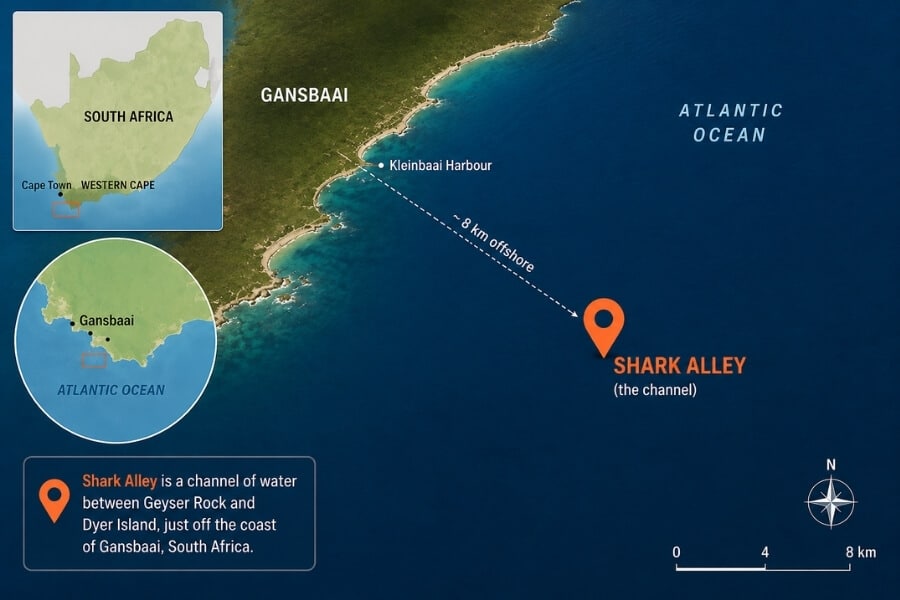
Experience shark cage diving in South Africa, where you can safely meet copper sharks and great whites for an unforgettable adrenaline rush. For those who are not interested in tiger sharks, you can try a Gansbaai marine experience with Shark Divers to observe the sharks that inhabit our coastal waters.