
Shark Alley: South Africa’s Most Famous Shark Hotspot Explained
If you’ve ever searched for where to learn about sharks in South Africa, chances are you’ve come across Shark Alley. This famous stretch of ocean near Gansbaai is one of the country’s best-known marine environments. It has captured the imagination of students, scientists, photographers, and ocean lovers for years. Shark Alley is especially well known for the interaction between sharks, seals, and the islands just offshore of Gansbaai.
In this guide, we explore Shark Alley in more depth, including its geography, wildlife, and the science behind why predators have historically used this area.
Shark Alley is also where shark diving Gansbaai famously takes place.
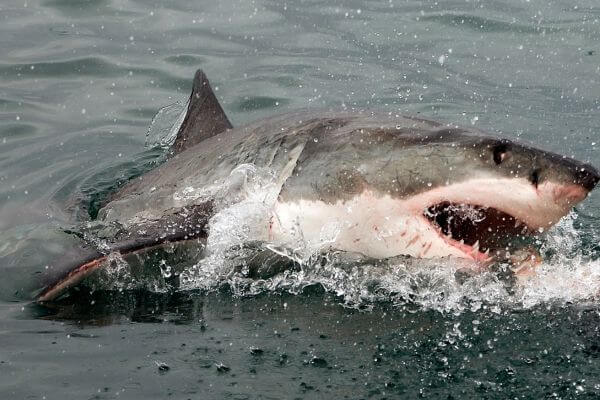
What Is Shark Alley and Why Is It So Unique?
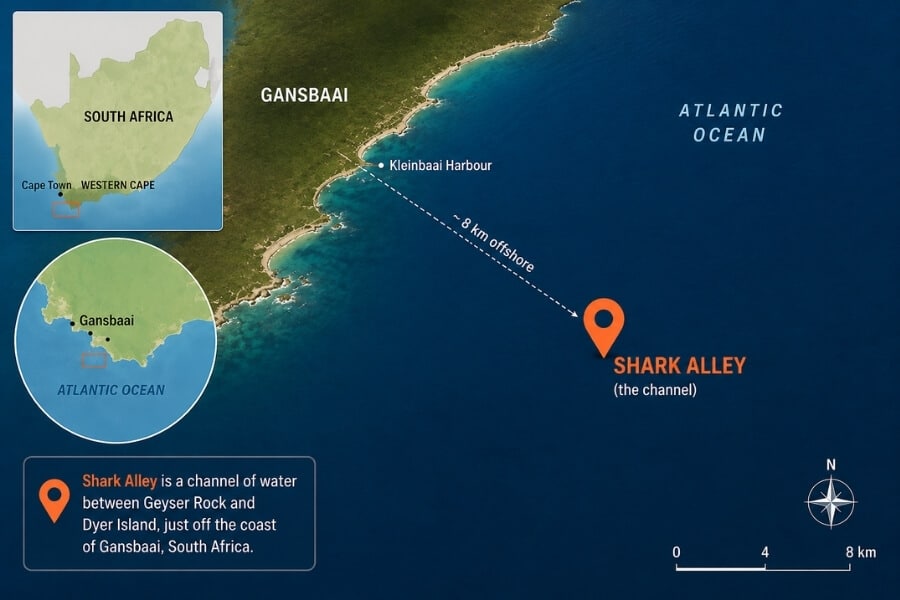
Shark Alley is a narrow passage of water (channel) located between Geyser Rock (also known as Geyser Island) and Dyer Island, just off the coast of Gansbaai in the Western Cape. According to CapeNature’s Dyer Island Nature Reserve Complex Management Plan, Shark Alley refers to a sand-bottomed channel between the two islands and has been known by this name for some time.
The uniqueness of Shark Alley lies in the high level of marine life within a very confined space. As many seals move back and forth between their colony on the island and the surrounding sea, Shark Alley has become one of the most common places in South Africa where predator-prey interactions occur.
Where Exactly Is Shark Alley Located in South Africa?
Shark Alley is approximately 8 kilometres offshore from Gansbaai in the Western Cape, GPS Latitude: -34.615621
Longitude: 19.352482.
It forms part of the Dyer Island Nature Reserve Complex, which includes several islands and is an area of very high ecological value. This area has been declared a protected nature reserve.
Because Gansbaai can be easily reached by car from Cape Town, the area has become well known for opportunities to learn about marine science, gain insight into wildlife, and experience the surrounding natural environment.
Why Do Sharks Hunt in Shark Alley?
Shark Alley has been a focal point for shark research due to a historical abundance of seals in the area and how those seals move up and down the channel.
A “hot spot” for predation is an area where a predator can predict when and where its prey will be moving. It does not necessarily mean that a shark is always present in Shark Alley or hunting in the same manner each day; however, this helps explain why Shark Alley is so closely linked to the presence of great white sharks.
The Role of Cape Fur Seals in Shark Alley’s Ecosystem
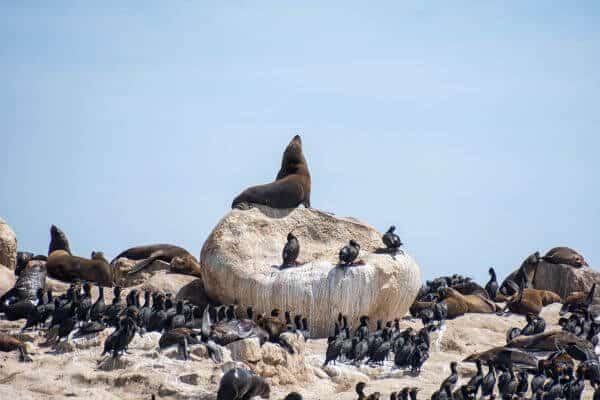
It was the Cape fur seals that made Shark Alley so well known. Because there is a large Cape fur seal colony on Geyser Island, and because these seals move from the island into the nearby waters, they became closely associated with the channel.
That makes the entire Dyer Island Nature Reserve Complex a high-ecological-importance area. Although the Cape fur seal population is important in this ecosystem, it is not the only part of it. The area includes fish, birds (including seabirds), other marine species, and sharks. Therefore, it is much more than just a shark area.
How Ocean Conditions Influence Shark Activity in Shark Alley
Ocean-wide influences on the waters around Gansbaai help create an environment in southern Africa where coastal productivity supports the web of life from plankton to larger species. This is one reason the coastline is known as a high-biodiversity region. Additionally, it should be noted that shark presence may vary depending on environmental factors. Weather, prey migration, water temperature, and other ocean-wide changes can affect which sharks are visible at a particular location.
What Makes Shark Alley a Global Shark Hotspot?
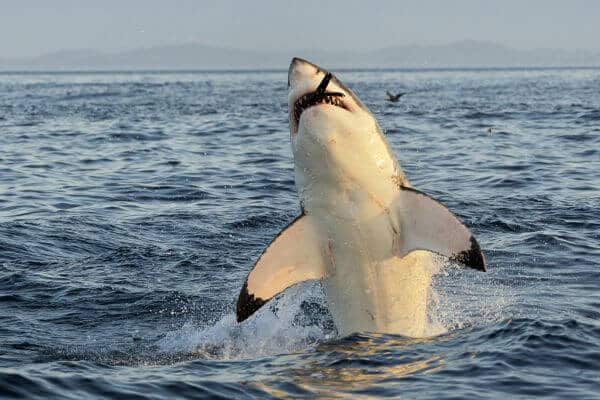
Shark Alley has become very well known as one of the most recognised areas for viewing great white sharks, and is closely associated with shark breaching behaviour, seals, photography, and marine science.
It is more accurate to describe Shark Alley as a globally recognised shark location rather than assign it a subjective ranking.
How Predator-Prey Relationships Work in Shark Alley
The shark-seal relationship demonstrates the predator-prey dynamic. The seals primarily rely on being aware of their surroundings and being fast and agile. In comparison, sharks operate as predators using stealth, precise timing, and high levels of force.
This interaction provides scientists with an opportunity to study how behaviour is influenced by risk, survival, and energy expenditure for marine animals within an ecosystem.
Additionally, the shark-seal system is one of the clearest examples showing that a food web is more than just who eats what. Rather, it comprises animal behaviours such as migratory patterns and the use of space and habitats.
Why Apex Predators Like Sharks Matter
Apex predators regulate prey population sizes and behaviours in a variety of marine habitats. Additionally, they contribute significantly to maintaining healthy ecosystem function by influencing food web dynamics.
Not only are sharks impressive animals in terms of their size and dramatic presence, but they also serve a significant role as ecological regulators. Sharks have evolved into highly refined predators with excellent sensory organs; therefore, conservation biologists consistently emphasise their ecological importance.
What Scientists Have Learned From Studying This Area
South African great white shark populations, particularly in historically known “hot spots” such as Gansbaai, have been studied for their behaviour, movements, and population dynamics.
Although studies have shown declining white shark sightings in areas where they were once common, research on white sharks continues today. There is currently no 100% consensus among researchers on why sightings have decreased in these historic “hot spots”. Therefore, this remains an open issue for science rather than a settled question.
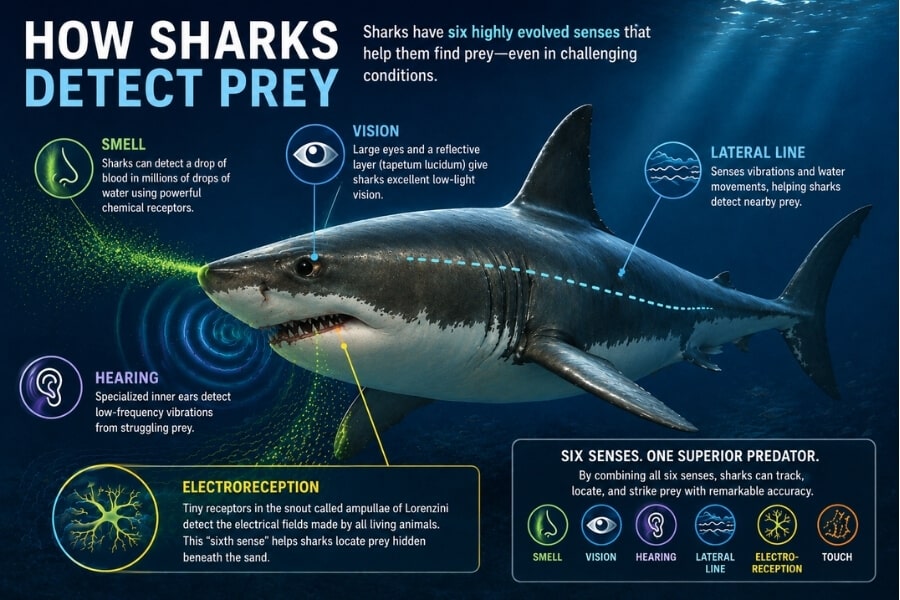
How Sharks Detect Prey
Sharks have six senses (smell, hearing, touch, vision, taste, and electroreception) that work together to help them locate prey in the ocean. According to the Smithsonian Institution, these six “senses” are so finely tuned that they help explain how sharks find their prey with such accuracy.
Some of the most important senses for finding food include:
- Smell – Helps identify chemicals in the water
- Electroreception – Identifies electrical signals produced by living organisms
- Vision – Can still be effective in dark or murky water
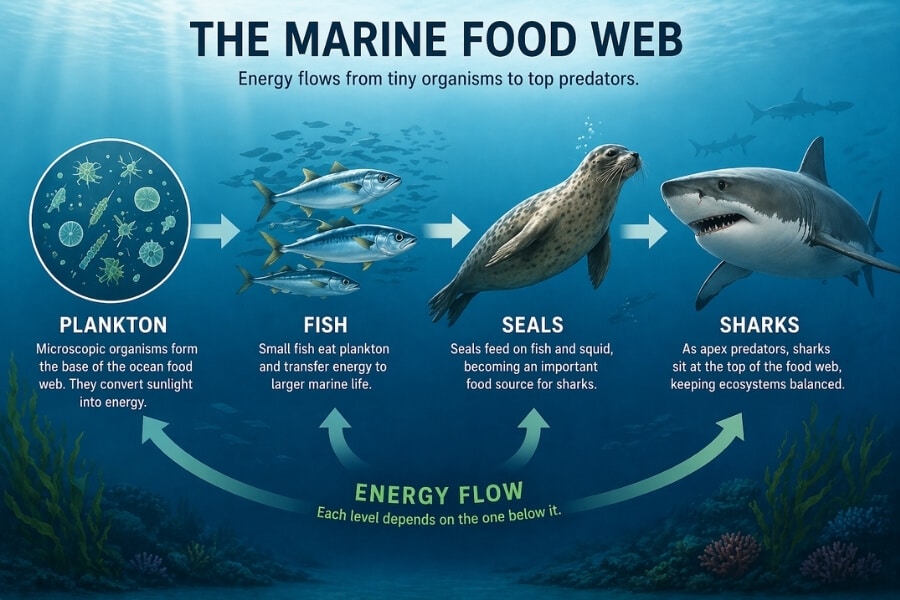
The Food Chain in Shark Alley: A Simple Breakdown
The local food web looks something like this:
- Plankton
- Marine organisms (such as small fish)
- Larger fish
- Seals and seabirds
- Large predators (sharks)
This is obviously a simplified representation, but it does show the flow of energy that makes up an ecosystem; therefore, it helps explain how a productive marine environment can support large predators.
How Shark Movement Patterns Affect Shark Alley Activity
Not all sharks behave the same way, and not all shark species are strongly migratory. However, many large sharks are highly mobile. They may shift their locations in response to prey, breeding, water conditions, and risk.
That is one reason sightings in Shark Alley can vary over time.

The Impact of Orcas on Sharks in South Africa
Orcas (killer whales) in coastal waters off South Africa are documented as hunting and killing sharks. In numerous instances, the targeted area on the shark appears to be its nutrient-rich liver. Additionally, orca activity can alter how sharks travel through their environment. For example, some shark species may leave an area or avoid travelling through specific areas when orcas have recently been present. Scientists agree that while there is evidence that orcas affect the behaviour and location of sharks, they represent only one component of a broader phenomenon.
Which Shark Species Might Be Seen in the Area Now?
Shark populations found in a particular area will vary depending on environmental conditions and food supply. Over the last few years, there has been an increase in the occurrence of Bronze Whalers in Gansbaai waters. However, the likelihood of encountering other coastal shark species in this general area cannot be ruled out. Sightings of great white sharks continue to be reported; however, these occur much less frequently than previously observed.

How Climate and Environmental Change Can Affect Shark Alley
Several factors, such as climate variability, fish migrations, fishing pressure, habitat changes, and other human-related effects, can influence the environment in which sharks live and the areas surrounding Shark Alley, thereby affecting their living conditions. Environmental change is clearly an influential factor, but none of these factors, on their own, fully explains the changing patterns of shark sightings at Shark Alley.
What It Feels Like to Visit Shark Alley
Seeing Shark Alley live creates a sense of just how vast and always changing this marine area is. The combination of shoreline, active wildlife, and constant ocean movement creates a feeling of power and unpredictability. The views of wildlife in the bay are very different from those in photos or videos.
What You Can Expect to See on the Water
On your trip, you may also observe:
- Seals using the island as a colony
- Seabirds
- Various sharks (depending on current shark activity)
- Other sea life in the surrounding waters
Best Time of Year to Experience Shark Alley Conditions
Different Shark Alley experiences may occur throughout the year, depending on weather, marine conditions, and where fish are moving relative to the area.
Is Shark Alley Safe?
Shark Alley is a wild marine environment where conditions can change rapidly. All activities within the area should be conducted by a trained operator with a well-documented safety plan. While experiences are designed to ensure participant safety, Shark Alley is part of the ocean and its natural environment, and participants may still encounter some risk from wildlife behaviour and changing environmental conditions.
Why Shark Alley in Gansbaai Is Such a Good Place to Learn About Sharks
The unique combination of shark behaviour as predators, prey interactions, marine food web dynamics, the geology of the area, shark conservation, and public interest in sharks (and all things related to them) creates a singular location that is especially interesting to students or anyone with even a passing interest in marine science.
Can You See Sharks in Shark Alley All Year Round?
Shark sightings are never guaranteed. What is seen can vary depending on conditions and broader ecological changes.
Why Is It Called Shark Alley?
The name refers to the narrow channel between the islands, where sharks became associated with seal movement and hunting activity.
How Far Is Shark Alley From Cape Town?
Shark Alley is about 2.5 hours by road from Cape Town to Gansbaai, followed by boat access to the island area.
Why Gansbaai Became Known as the Shark Capital of the World
This nickname comes from Gansbaai’s long association with great white sharks, Shark Alley, seal activity, and marine research. It is a widely used nickname rather than an official title.
Why Shark Alley Matters
Shark Alley shows how geography, wildlife behaviour, and conservation come together in one marine space. It helps build a clearer understanding of predators, ecosystems, and the changes happening along South Africa’s coastline.