
Why Is It Called a Great White Shark?
The Scientific Name: Carcharodon Carcharias
Before unpacking the common name, it helps to understand the scientific one. Carcharodon carcharias comes from ancient Greek: karcharos, meaning sharp or jagged, and odous, meaning tooth. Carcharias is derived from karcharias, a term ancient Greeks used for sharks generally. So the scientific name translates roughly as the sharp-toothed shark, which is as accurate as names get.
The common name, great white shark, emerged separately, rooted in what observers could see most obviously: the animal’s size and its distinctive white underside.
What Does “Great” Mean?
The word great refers to size, and it is entirely justified. Great white sharks are the largest predatory fish on earth, with adults regularly exceeding 4 to 5 metres in length. Exceptional individuals have been reliably measured at 6 metres or more. They sit at the very top of the ocean food chain — the only species that will consistently prey on a fully grown great white is the orca.
The word great also carried a different weight historically. Early naturalists used it to distinguish this species from smaller shark species they had already documented. It was a classification term as much as a descriptive one.
The white in great white shark refers specifically to the animal’s belly — and it is one of nature’s most elegant design solutions.
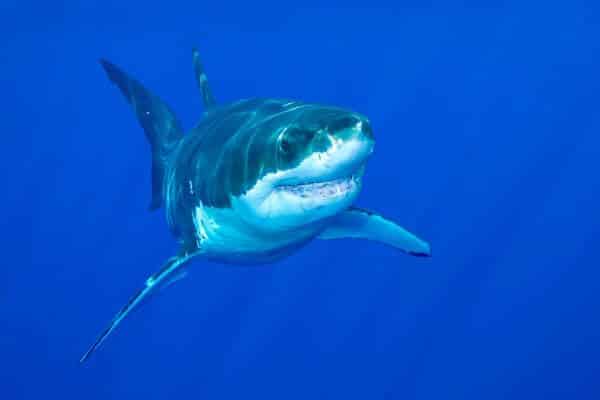
Great white sharks display a colouration pattern known as countershading. The dorsal surface is grey to bluish-grey, blending with the dark water when viewed from above. The ventral surface is a stark, bright white, which blends with the lighter surface of the ocean when viewed from below. This makes the shark effectively invisible from multiple angles simultaneously, allowing it to approach prey without detection.
During cage dives in Gansbaai, you would wait at the surface, head above water, watching. The first thing you see is the dorsal fin cutting through — dark, unhurried, impossibly large up close. Then you take a breath and submerge, and suddenly the whole picture changes. From below, that same shark reveals its white belly, dissolving seamlessly into the water above it. Two colours that should create a stark contrast somehow melt into their surroundings so completely that you understand immediately why prey never sees it coming. Witnessing countershading not just as a concept but as a living, working camouflage system — from both above and below the surface in the same moment — is one of the most humbling things this ocean has ever shown me.
Is the Name “Great White” Misleading?
Somewhat, yes — and it is worth knowing why.
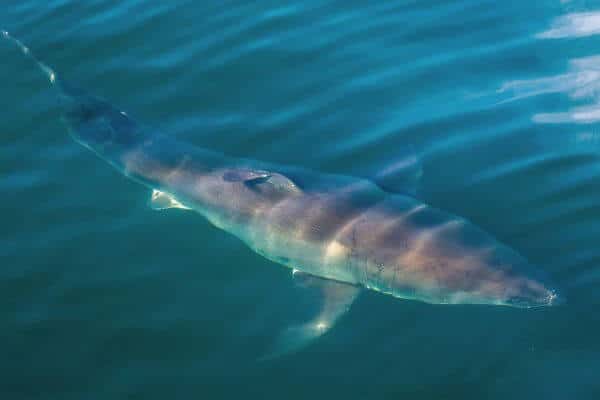
The white colouration does not cover the entire body. Most of the shark is grey, brown, or olive. Only the underside is genuinely white, and even that can vary between individuals depending on age, health, and water conditions. Calling it a great white based on a portion of its belly is a little like naming a person entirely after the colour of their shoes.
The name also contributes to a perception of the species as uniformly pale and ghostly, which feeds into the cultural mythology around it. In reality, from above, a great white shark is dark and difficult to distinguish from the surrounding water. The white is only visible from below.
Other Names Around the World
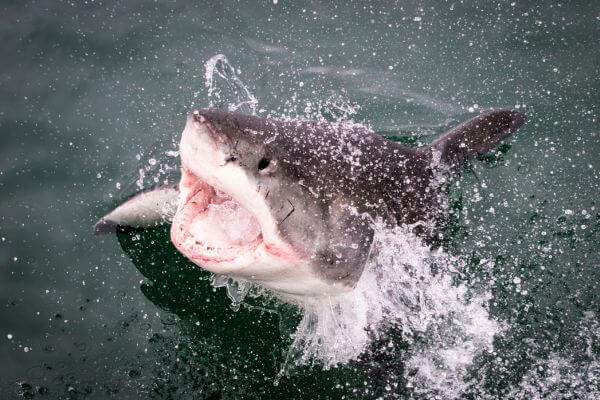
The great white shark goes by different common names in different regions. In Australia and New Zealand, it is frequently called the white pointer — a reference to its distinctive pointed snout. In South Africa, you will sometimes hear it called white death, though this is largely a media-driven term that researchers and operators in Gansbaai tend to avoid. Scientifically, it remains Carcharodon carcharias everywhere.
Seeing the Name Come to Life in South Africa
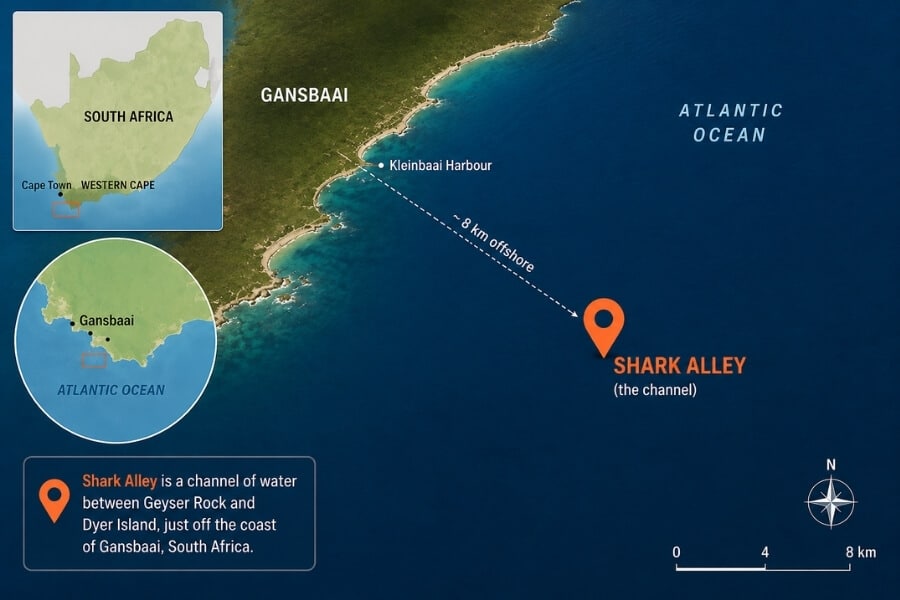
For years, Gansbaai was the undisputed capital of great white shark sightings, with the waters around Dyer Island and Shark Alley offering some of the most reliable encounters on earth. The great white shark population along South Africa’s coast has shifted in recent years, and today Mossel Bay has become the more consistent destination for cage diving with great whites, while Gansbaai remains world-renowned for encounters with copper sharks and sometimes great white sharks.
Both destinations offer something no aquarium or documentary can replicate — a real, unscripted encounter with apex predators in their natural habitat.
When a great white does approach the cage, you understand the name completely. The size is immediately apparent — these animals are significantly larger than most people expect. The white belly is unmistakable the moment you submerge. And Carcharodon carcharias, the sharp-toothed one, reveals itself the moment the shark opens its mouth.
FAQ
Why is it called a great white shark and not just a white shark? The word great distinguishes it by size from other shark species and was used historically by naturalists to classify it separately from smaller sharks already documented.
Is a great white shark actually white? Only on its underside. The rest of the body is typically grey to dark olive. The bright white belly is the characteristic the common name refers to.
What is the great white shark’s scientific name? Carcharodon carcharias, from the Greek for sharp-toothed shark.
What do Australians call the great white shark? White pointer, referring to the shark’s distinctive pointed snout.