
Shark Reproduction Explained: Pregnancy, Birth, and Shark Life Cycle
Shark reproduction has been shaping life in the oceans for 420 million years, yet it is still so fascinating and misunderstood today. Not every shark does it the same way; some lay eggs, others give live birth, and rarely, female sharks can give birth to pups without any male involvement. Different shark species use different processes, making it hard to say there’s a clear pattern at all.
Shark reproduction reveals how well these ancient ocean predators have evolved to adapt to their environment. Their lives unfold very differently from most sea creatures.

How Does Shark Reproduction Work?
Shark reproduction is different from that of most bony fish. Sharks reproduce through internal fertilisation, which means that fertilisation occurs in the female’s body. Male sharks have unique body parts called claspers that help them transfer sperm during sex. Once eggs get fertilised, baby sharks grow in different ways, depending on the shark species they are.
Some key ideas you might hear involve:
- Gestational period – how long a female is pregnant
- Sexual maturity – the age when sharks can reproduce
- Nursery grounds – Safe areas where baby sharks can grow
- Viviparity – When sharks give live birth
- Oviparity – When sharks lay eggs
- Ovoviviparity – When eggs hatch inside the mother
- Parthenogenesis – Reproduction without a male
How Long Are Sharks Pregnant? Understanding Shark Reproduction and Gestation
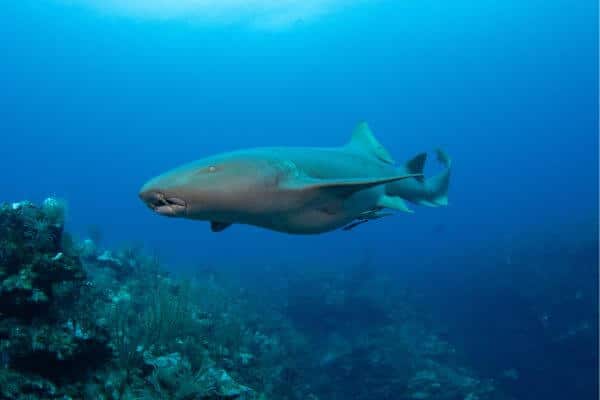
One of the most surprising facts about shark reproduction is how long sharks can be pregnant for.
Some baby sharks spend years inside their mother before they are even born. Their slow growth leads to pregnancies that last far beyond what most creatures experience.
Some shark pregnancies might stretch just three months. Others go far beyond, often over three years, depending on the species.
Examples of how long shark pregnancies typically last:
- Spiny dogfish shark – 18 to 24 months
- Great white shark – about 12 months
- Hammerhead shark – 8 to 12 months
- Tiger shark – 13 to 16 months
- Frilled shark – potentially up to 3.5 years
Sharks take years to reach breeding, which causes their populations to grow slowly. That delay makes them vulnerable to overfishing.
Do Sharks Lay Eggs or Give Birth?
A question frequently asked about shark reproduction is whether they lay eggs or give live birth.
The answer is: both. Not every shark does the same thing when it comes to having pups.
1. Egg-laying sharks (oviparous species)
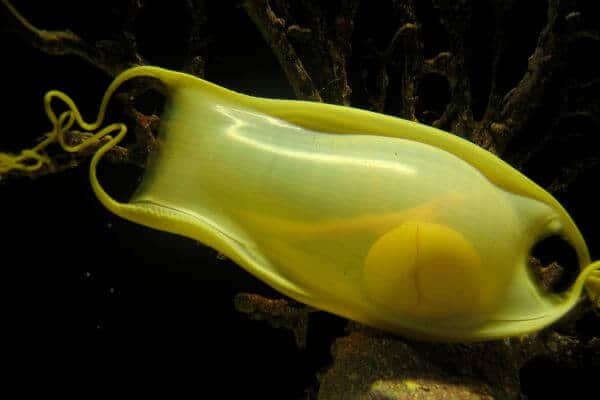
A few sharks give birth to tiny egg clusters protected by hard, fibrous shells; people sometimes name these “mermaid’s purses.”
Characteristics:
- Eggs cling to rocks or seaweed
- Embryos develop outside the mother
- Often seen in smaller, bottom-dwelling sharks
These sharks include:
- Catsharks
- Dogfish Sharks
- Bullhead Sharks
2. Live-bearing sharks (viviparous species)
This is a shark reproduction method that stands out as highly developed compared to others. Instead of laying eggs, they give birth to live pups.
Features:
- Embryos receive their nutrients from the mother
- Some species have a placenta-like structure
- Pups are born fully formed and ready to swim
These sharks include:
- Bull Sharks
- Blue Sharks
- Hammerhead Shark
3. Eggs That Hatch Inside the Mother (Ovoviviparity)
This approach falls somewhere in the middle, not quite egg-based, yet not fully born either.
How it works:
- Eggs develop inside the mother
- Pups hatch internally and are born live
- No direct placental connection between mother and pup
These are seen in:
- Great White Sharks
- Sand Tiger Sharks
- Whale Sharks
How Many Babies Are Born Through Shark Reproduction?
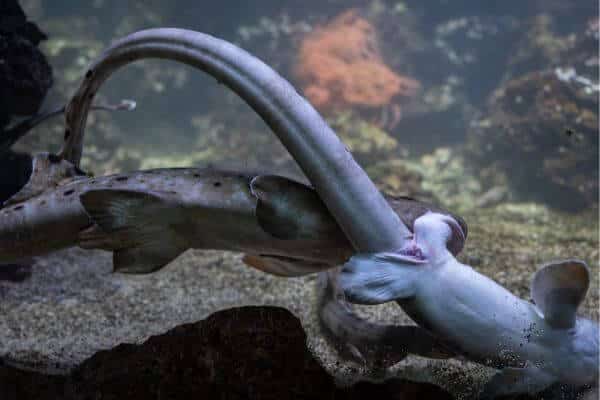
Some sharks have just one pup at a time, while others deliver multiple at once. This depends on the species and how they reproduce.
Typical litter sizes:
- Small sharks: 2 to 10 pups per litter
- Medium-sized sharks: Between 4 and 10 pups per litter
Some unusual examples:
- Sand tiger sharks often give birth to only two pups, but they are large and strong.
- Hammerhead sharks can have dozens of pups at once.
In many shark species, litter size is influenced by pup survival; species with lower pup survival tend to have larger litters.
What Do Sharks Do During Mating?
Mating happens fast, yet comes with great force. With no hands to grip each other, these creatures turn to biting, using their mouths to hold on during union.
Common shark mating behaviours include:
- The male biting the female’s fins or part of her body
- Females often have thicker skin for protection
- Mating usually takes place in warmer parts of the ocean
Mating seasons often align with:
- Water temperature changes
- Migration routes
- Availability of food
Shark Nursery Grounds: Where Baby Sharks Grow
After birth or hatching, young sharks slip into quiet spots like shallow bays near land, where significant danger stays away. These habitats, known as nursery grounds, offer warmer, calmer water and abundant food, which gives them a better chance at survival.
Estuaries, bays, and shallow reefs often serve as nursery grounds and play a significant role in the survival of shark populations.
Can Sharks Reproduce Without a Male? (Parthenogenesis)
A strange twist in shark reproduction is that they sometimes give birth without a male.
Now and then, a unique event allows female sharks to produce offspring on their own.
Key facts:
- Seen in captivity (zoos/aquariums) and some wild populations
- Offspring are genetic clones of the mother
- Usually, it is a survival response when there are no males to reproduce with
When Do Sharks Reach Sexual Maturity?
Sharks grow slowly, and becoming an adult might take decades instead of mere years. This slow development leaves sharks vulnerable to a population decline.
Average maturity ages:
- Small species: 3 and 10 years
- Medium species: 5-15 years
- Large sharks: 20+ years
What Is the Average Shark Life Span?
Some sharks spend much more time in the water than you might expect. Each shark species ages at its own pace. Still, plenty of shark species outlive most creatures swimming today.
Examples:
- Small reef sharks: 12 to 25+ years
- Tiger sharks: 27 to 30 years
- Greenland shark: 250+ years, holding the record for the longest-living vertebrate known
When sharks live a long time and have few pups, it takes their population a long time to recover from threats.
Why Shark Reproduction Is Important for Ocean Health
Sharks are at the top of ocean food chains, controlling populations through their role as big predators. When shark reproduction works well, it benefits the system because it:
- Balances fish populations
- Keeps coral reefs healthy
- Stabilises ocean food webs
Should sharks struggle to reproduce, ripple effects may spread through entire ocean ecosystems.
Explore Sharks and Marine Life Further
Sharks grow slowly, reach sexual maturity late, and reproduce infrequently, which means their populations take a long time to recover if they are threatened. Long gestation periods and limited litter sizes make many species vulnerable to ongoing dangers in the ocean. Understanding these biological realities is essential for effective shark conservation and long-term ocean health.
Why Won’t I See Newborn Great White Sharks in Mossel Bay, South Africa?
The newborn white shark is born in the open ocean and grows up in a nursery area; therefore, it will not be found swimming through the waters of Mossel Bay. Juvenile white sharks and adult white sharks, those that have successfully navigated the initial, most critical stages of their lives, can be seen throughout the waters of Mossel Bay. Adult white sharks travel freely in the waters of Mossel Bay, display normal behaviour, and feed on prey with incredible skill. In addition to seeing juvenile and adult white sharks in their ocean environment in Mossel Bay, the ability to observe them from a cage in the water allows for the possibility of combining scientific knowledge, conservation of white sharks and actual encounters with the animals. Seeing white sharks swim around the cage in their own ocean environment is an experience you will never forget, viewing the ocean’s most well-known predator in its true form.